
Slavic Universities Project
Peter the Great St. Petersburg Polytechnic University is an active participant in promoting Russian education abroad. The largest of its current international projects is the "Slavic Universities," established under intergovernmental agreements in Armenia, Belarus, Kyrgyzstan, and Tajikistan.
This international project has been systematically supported by the Ministry of Science and Higher Education of the Russian Federation since 2021. SPbPU acts as the project coordinator and curator for all four universities: Belarusian-Russian (BRU), Russian-Armenian (RAU), Kyrgyz-Russian (KRSU), and Russian-Tajik (RTSU).
Towards new horizons
The prospects for cooperation between the Polytechnic University and the Slavic Universities are linked to the transition to systemic consolidation. Priorities include engineering and digital education, academic mobility, youth policy, and entrepreneurship.
BRU and RAU will continue to operate their laboratories and implement joint programs, KRSU will establish engineering schools and design bureaus, and RTSU will develop its language infrastructure and staff.
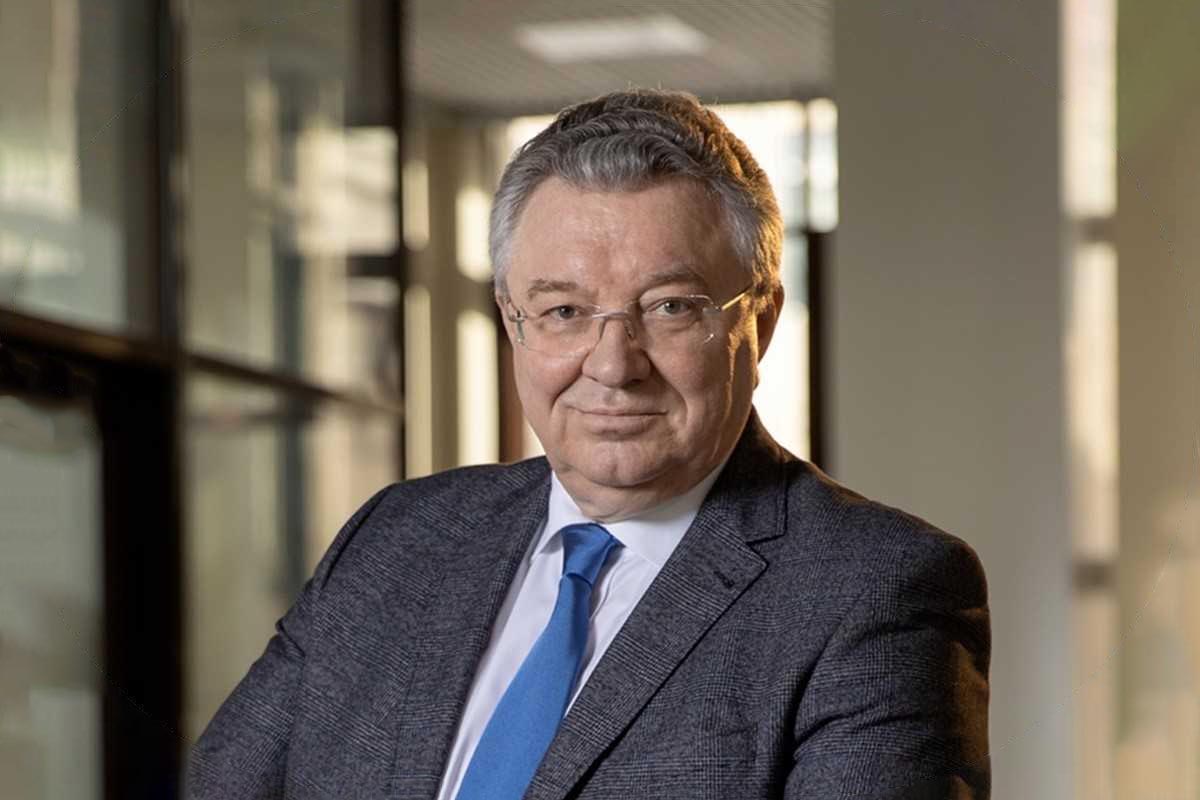
Academician of the Russian Academy of Sciences Andrei Rudskoi, SPbPU Rector:
- For St. Petersburg Polytechnic University, it is a special honor and a great responsibility to share our experience, educational competencies, and best engineering practices with the Slavic universities, while simultaneously learning from each other and co-creating new things. We are diverse—in our schools, traditions, and national cultures—but it is in this diversity that true Slavic brotherhood is born. The Polytechnic University is sincerely proud to contribute to the creation of the Commonwealth of Slavic Universities—a unique model in which Russia and partner countries are working together to build the future of science, education, and technological development.
Slavic universities are a territory of shared meaning, where knowledge becomes power and cooperation becomes a fulcrum for the future.
The strategic mission is to promote Russian education in the CIS countries and strengthen the scientific and educational space of the Union State and the EAEU.
The goal of this collaboration is to create a Russian-national community of leading universities that demonstrate the best educational and scientific practices, forming a modern digital, human resources, and scientific-technological ecosystem in partnership with leading Russian universities.
As part of the project, the “Slavic Horizon” Summit is held annually at SPbPU. Representatives from the Russian Ministry of Education and Science and participating universities attend the summit, where interim results are summarized and a plan for further integration is developed.
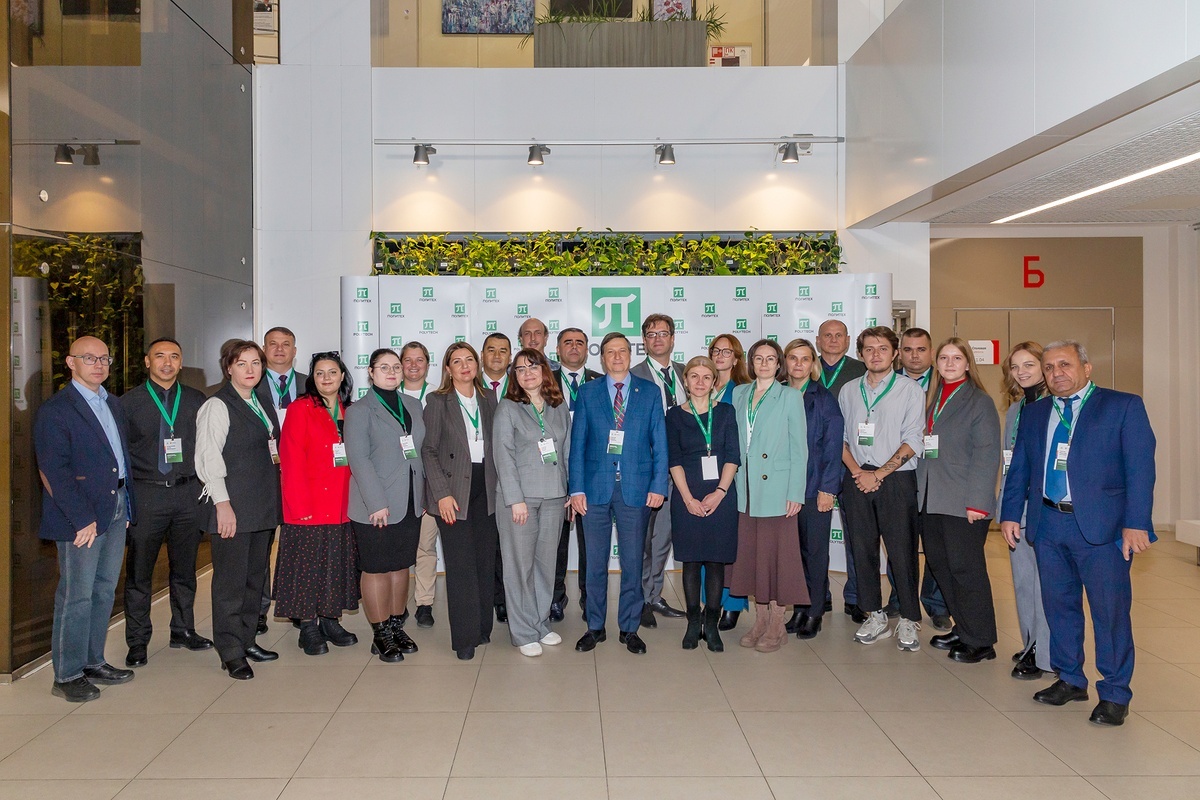
Key areas of activities:
- Education: 16 network programs and internship programs are being implemented, and a course on "Fundamentals of Project Activities" has been introduced at RAU and KRSU. At KRSU, 36 core engineering programs have been reviewed. More than 500 employees of Slavic universities have participated in advanced training programs. Partners are connected to the electronic library and cloud infrastructure of the Polytechnic University.
- Science: Joint laboratories and research centers have been established. A network laboratory for intelligent robotics operates at BRU, an international REC for telecommunications technologies is being created at RAU, and a student design bureau has been opened at KRSU. Annual international conferences on promising scientific areas are held.
- Youth policy: a unified environment for student interaction is being formed. The Student Community Accelerator, the Lean Manufacturing Olympiad, and Science and Entrepreneurship Days are held. Students participate in various youth events, such as Media Forums held by the Russian Ministry of Education and Science at each of the Slavic universities.
- Culture: the humanitarian dimension of the project has been developed. Vibrant choral festivals, concerts, family Victory Days, and other joint events have become a tradition.
Belarusian-Russian University is an interstate higher education institution under the joint jurisdiction of the Republic of Belarus and the Russian Federation and has the status of state universities in both countries. In 2003, BRU became a Russian-national university.
Number of students — 4000;
Number of faculty — 800.
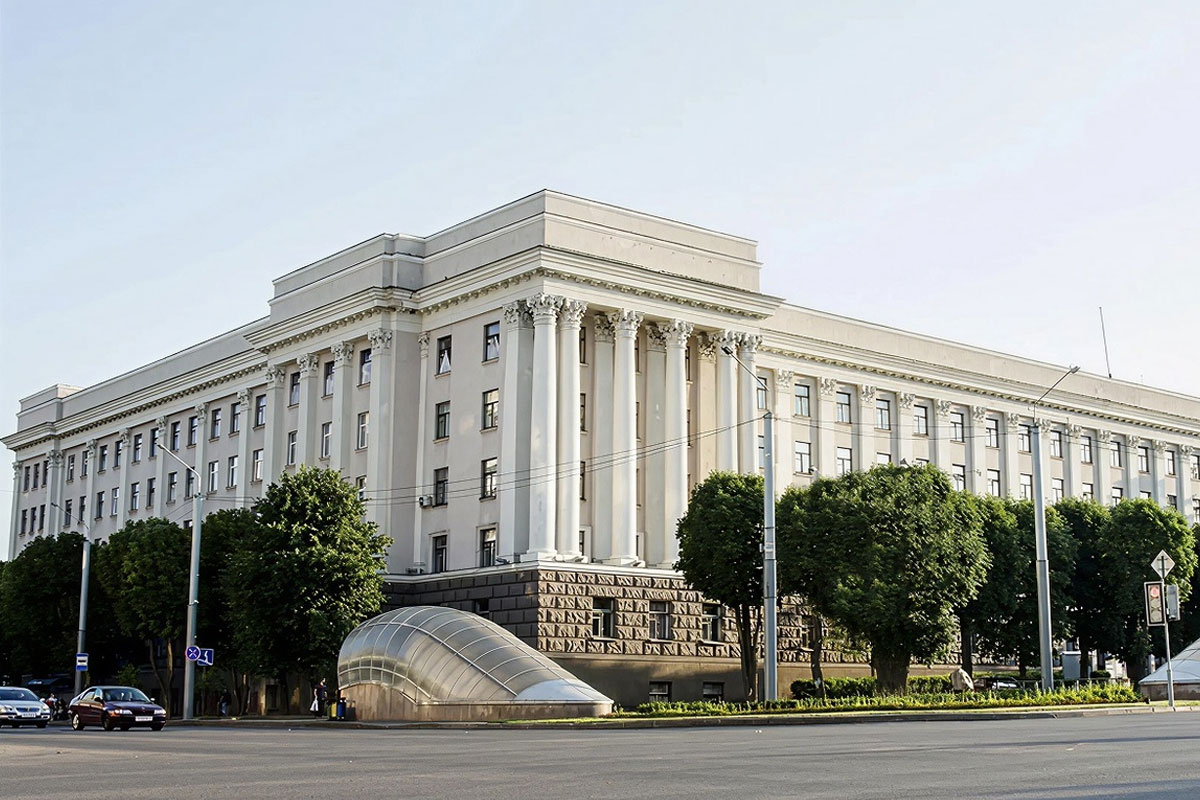
Academic mobility has been particularly successful with BRU, for both students and faculty: from the implementation of continuing professional education programs (prior to the COVID-19 pandemic) to participation in core educational programs in a network format.
The first programs, in 2022, were “Transport and Technological Complexes” and “International Regional Studies.” In 2024, an agreement was signed to organize a network master's program in “Innovation Management,” followed a year later by “Information Systems and Technologies.”
As part of the network programs, BRU students complete training in individual disciplines and internships at SPbPU (in 2025, large groups of BRU students completed training in the programs “International Regional Studies” and “Welding Equipment and Technologies”).
The “Welding Equipment and Technologies” program at BRU is considered one of the strongest; a Certification Center operates within the department of the same name. Close ties with a similar department at SPbPU make education in this specialty even more competitive.
Every year, as part of the BRU development program, 15 to 20 of its faculty members complete professional development programs and internships at SPbPU. SPbPU staff also travel to Belarus to give lectures, conduct seminars, and master classes.
Special attention should be paid to the Network Laboratory for Intelligent Robotics and Cyber-Physical Systems at BRU, opened in 2022. It has become the crown jewel of this collaboration. Its modern equipment enables fundamental and applied research, as well as the development of innovative technologies and hardware and software solutions for industrial automation.

The Kyrgyz-Russian Slavic University was opened in 1993 in accordance with the Treaty of Friendship, Cooperation, and Mutual Assistance between the Kyrgyz Republic and the Russian Federation. In 2004, by decree of the President of the Kyrgyz Republic, the University was named after the first President of the Russian Federation, Boris Nikolayevich Yeltsin.
Number of students — 8900;
Number of faculty — 1200.
KRSU is conducting a systematic modernization of its educational process. This includes an assessment of curricula across all areas of study. Programs are being streamlined to meet the educational standards of both countries, and their content is being updated to reflect modern requirements.
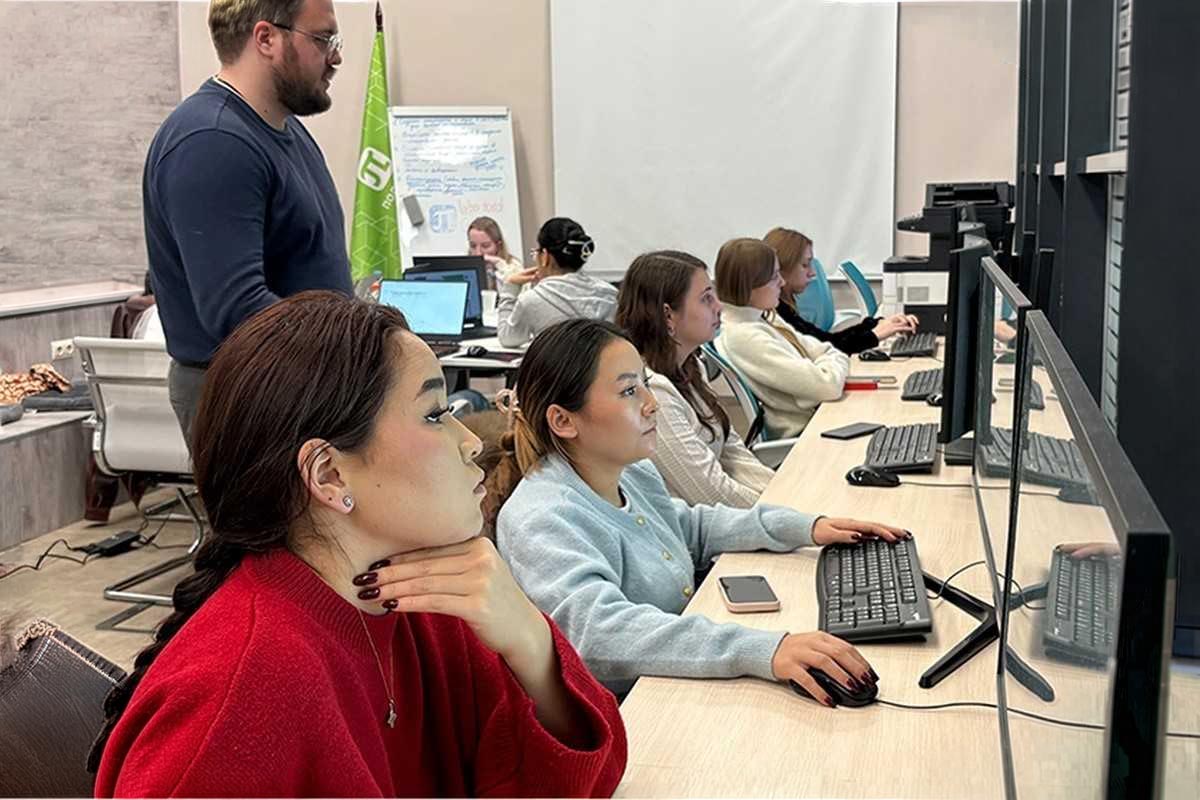
Areas of cooperation:
- Modernization and development of educational programs. Since 2024, SPbPU has been closely collaborating with KRSU on the modernization of engineering education, with most of the university's institutes involved. Currently, 36 curricula in two KRSU engineering faculties have been modernized using SPbPU's competencies and experience, and network educational programs have been launched.
- Participation in educational programs and internships. During 2024-2025, 80 KRSU students completed a semester-long course at SPbPU, and 20 faculty members participated in research and educational internships.
- Development of distance learning technologies in education. SPbPU specialists implemented their development at KRSU—a distance learning system, which is included in the Russian software registry—and trained faculty members.
- Cooperation in library collections. Software for accessing the SPbPU electronic library, considered one of the leading in Russia, was transferred to KRSU. A separate content collection was created specifically for the partner's needs, giving KRSU students and staff seamless access to 20,000 copies of educational literature.
- Creation of a student design bureau. Under the coordination of the Polytechnic University and with industry support, a student design bureau was created at KRSU. It develops project documentation for real estate projects based on modern digital solutions for specific orders. Plans include the creation of a student design bureau, also in collaboration with industrial partners KRSU and SPbPU.
- Implementation of research and development (R&D) with the participation of Kyrgyzstan's industrial partners. Joint work is structured within the logic of applied science and the full technological cycle: setting objectives in the interests of industry, formulating research hypotheses, processing experimental data, designing and preparing engineering prototypes ready for pilot implementation and subsequent scaling.
The KRSU High-Altitude Observatory for Atmospheric Physics, the university's flagship research complex, deserves special attention. In 2025, as part of infrastructure modernization, a new-generation Purple Air sensor was installed, expanding the measurement and analytical capabilities for monitoring the lower atmosphere and ionosphere.
The Russian-Armenian University is an interstate higher education institution in Yerevan, founded in 1997 and operating under an agreement between Russia and Armenia. The university is accredited in both countries, and upon completion of its studies, students receive two state diplomas: one from the Republic of Armenia and one from the Russian Federation. Instruction is bilingual.
Number of students — 5100;
Number of faculty — 420.
The partnership between SPbPU and RAU began in 2014. It encompasses joint research activities across a broad spectrum, from nanostructure physics to economics. Intensive exchange of experience occurs through Visiting Professor programs, participation in significant scientific events organized by partner universities, cross-training programs, and continuing professional education programs.
Areas of cooperation:
- access to modern scientific infrastructure, expert schools, and research results;
- participation in joint projects;
- exchange of experience and work results for research and teaching staff;
- involvement of students and young scientists in research groups, youth projects, and initiatives.
Such cooperation undoubtedly strengthens the scientific potential of the Russian Agrarian University and contributes to the improvement of the efficiency of educational activities, as well as the training and retraining of personnel for high-tech fields.
Of particular importance is the adaptation of the “Fundamentals of Project Activity” course developed at SPbPU for RAU. RAU students work on real-life cases, defend projects, and participate in master classes. Collaboration can be expanded through double-degree modules and the development of new educational pathways.
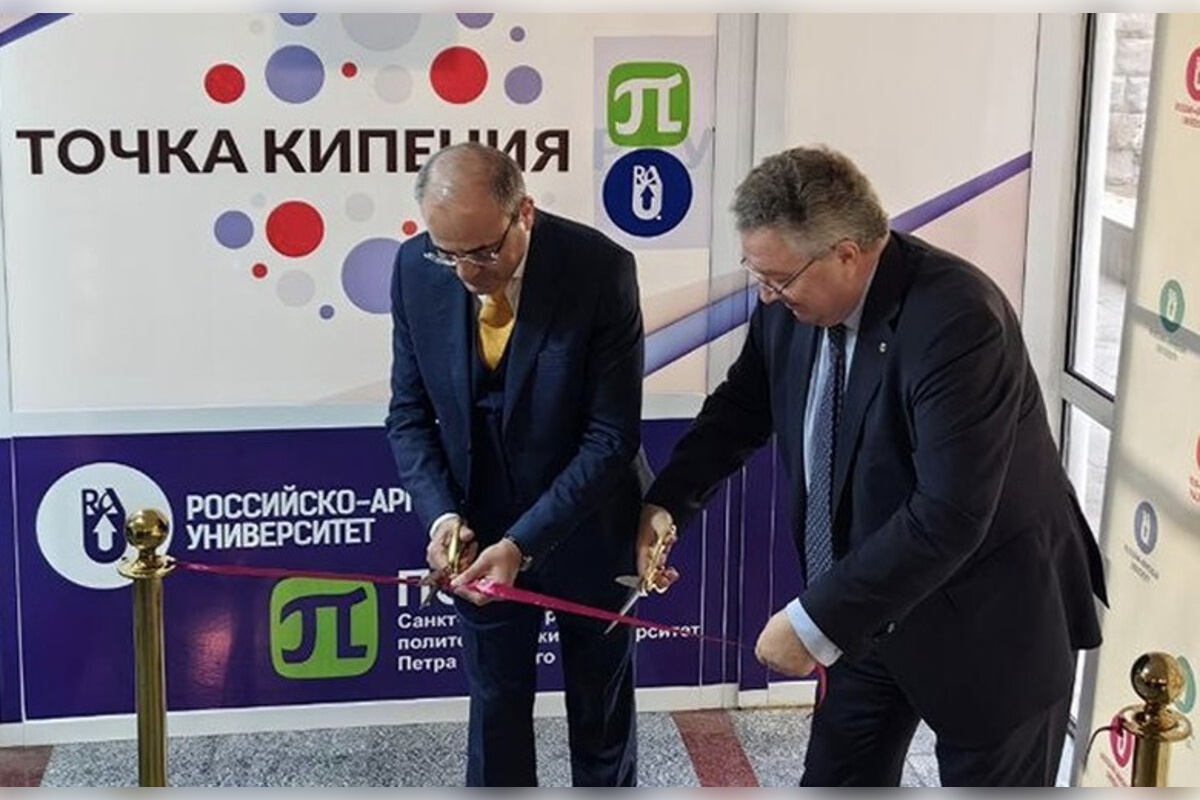
Of particular note is the RAU "Boiling Point", it has become a key platform for joint youth initiatives with SPbPU. It hosts project intensives, hackathons, student community development events, and accelerator programs. The platform brings together students, faculty, employers, and the expert community.
The Russian-Tajik (Slavic) University is an interstate institution of higher professional education. It is under the joint jurisdiction of the Republic of Tajikistan and the Russian Federation. RTSU was founded in 1996 and is located in Dushanbe. It enjoys the status of state universities of the Russian Federation and the Republic of Tajikistan.
Number of students — 4000;
Number of faculty — 700.
Cooperation with the Russian-Tajik (Slavic) University began at the end of 2024, and in January 2025, SPbPU officially became its coordinator.
The joint work plan included five blocks covering the activities of RTSU, but at Tajikistan's request, the training of school teachers was prioritized. The country requires highly qualified science teachers, and SPbPU has begun sharing its expertise with partners, developing retraining and advanced training programs for future teachers in physics, computer science, and chemistry.
In 2024, approximately 20 teachers underwent professional retraining, and in the fall of 2025, nearly 30 physics and computer science teachers received advanced training. SPbPU specialists presented modern teaching methods and tools.
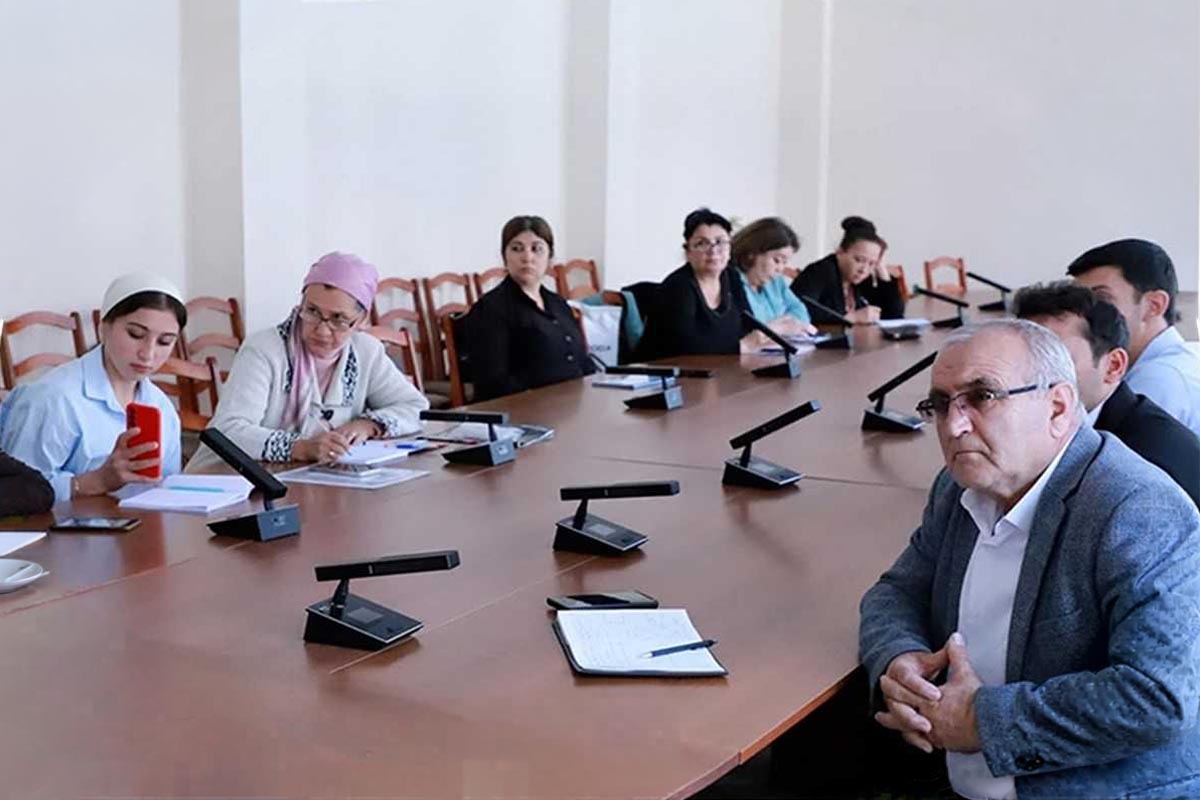
In December, another lecture series for future teachers was held in Dushanbe, organized by SPbPU lecturers. The series focused on developing teachers' professional competencies and introducing modern technologies into the teaching of scientific disciplines. At the same time, SPbPU is providing expert support for the modernization of the RTSU secondary comprehensive school in Dushanbe.
RTSU's point of interest is “Russian Space,” a project aimed at preserving and promoting the Russian language and culture, education, and science in Russia. Residents of Tajikistan can take free Russian language courses at these sites: from October to June, five study groups of 15-20 students operate. These groups primarily accommodate students from RTSU and other universities, schoolchildren, and government employees.

Nikita Golovin, Head of the Slavic Universities Project Office, Deputy Head of the SPbPU International Cooperation Office
- The Polytechnic University coordinates activities to improve the performance of universities. One of our current key tasks is to help Slavic universities formulate new five-year development strategies that would include policies for core processes, strategic university goals, and implementation roadmaps through 2030. Specific projects and initiatives should be integrated into the overall strategy and effectively address the identified challenges.