
SPbPU team won a first-degree diploma at the African Forum-Competition of Young Scientists
The team of Peter the Great St. Petersburg Polytechnic University won a first-degree diploma at the Russian-African Forum-Competition of Young Scientists “Future Engineers of the World — the Foundation of Sustainable Development.” The SPbPU team became the winners in the “Mechanical Engineering” section, presenting a development for agricultural machinery.
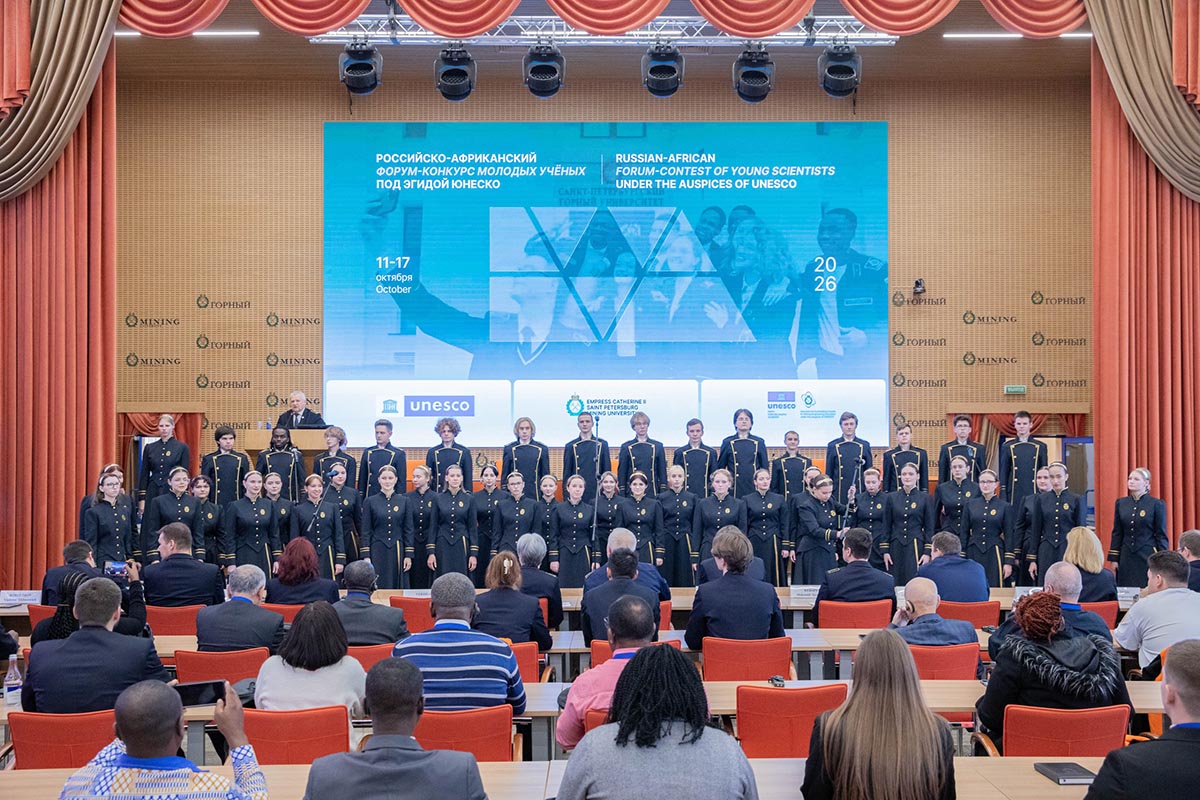
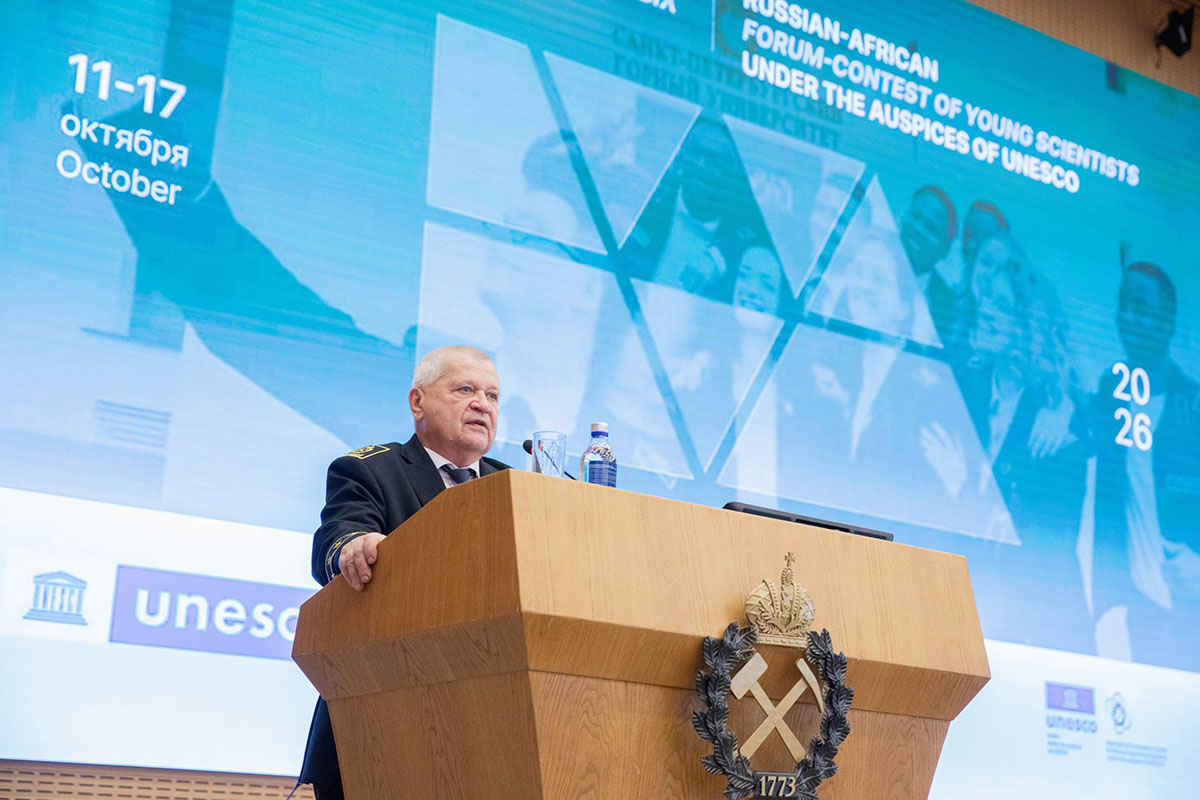
The forum was held from October 11 to 17, 2026, at the Empress Catherine II St. Petersburg Mining University within the framework of the Second Russian-African Raw Materials Dialogue. More than 1,200 people took part in the competition program, and 465 researchers reached the final: 275 citizens of African countries and 190 Russians. Projects were presented in 11 thematic sections — from geological exploration and digitalization to ecology and construction. The defense took place in person in St. Petersburg and remotely.
Victory in the “Mechanical Engineering” section was brought by the project “WAAM and Biomimetic Design of a Cultivator Blade for Small Farmers.” The team was led by an engineer from Cameroon, Kuam Weichur Dylan. Semyon Bubnikov, Artyom Novoselov and Peter Manyakin also worked on the development. The scientific supervisors were Professor Anton Naumov and Doctor Oleg Panchenko.
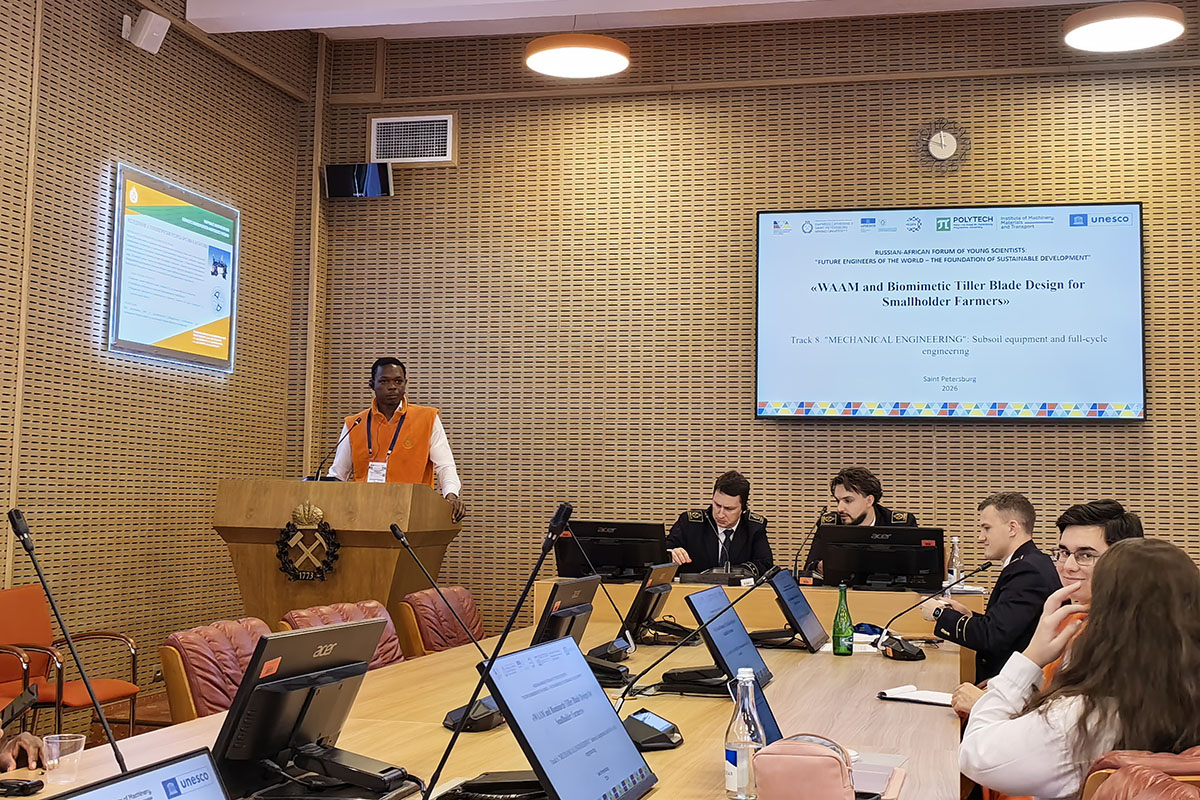
The team members developed an approach to manufacturing and repairing cultivator blades using wire arc additive manufacturing (WAAM) technology, which allows metal parts to be created layer by layer. When designing the shape, the engineers used the principle of biomimetics: the paws of a shrew, adapted to working with soil, became the model.
The technology makes it possible to produce or restore parts directly at the site of operation of agricultural machinery, reducing dependence on supplies of imported spare parts. Tests showed a 21% reduction in torque, a 12.5% improvement in the quality of straw placement and a threefold increase in blade service life.
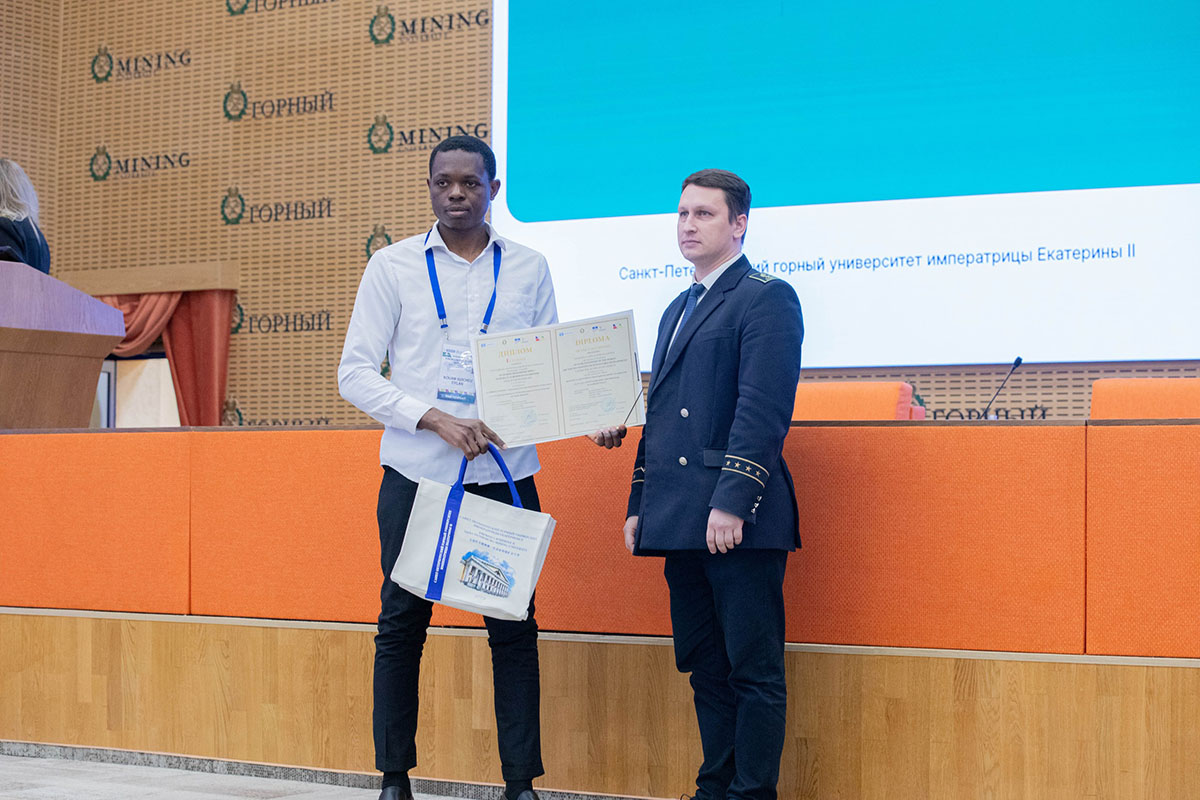
This forum showed how the Russian engineering school can respond to the real needs of the African continent. We combined metal 3D printing technology and biomimetics so that small farmers would not have to wait for imported spare parts but could get reliable machinery right on the spot. Our goal is not just to win the competition but to create local repair centers that will really change life in rural areas,
shared Kuam Weichur Dylan.
SPbPU also presented projects in the sections “Energy of the Future” and “Construction.” The team of Ilya Ushpik, which included Godwin Ibeojo, Valeria Kraevaya, Sibilla Temurkaeva and Chantelle Chileshe, proposed a solution for decentralized power supply to communities in Nigeria. The project envisages the use of modular power plants “Zvezda-GP-315NK” with a capacity of 315 kW to reduce flaring of associated petroleum gas.
In the “Construction” section, Anastasia Soroko, Vladislav Alyoshin and Grigory Rytov presented a mining waste management system in Africa. It combines paste tailings storage, multilayer protective screens and digital twins of tailings dams to reduce the risk of man-made accidents.
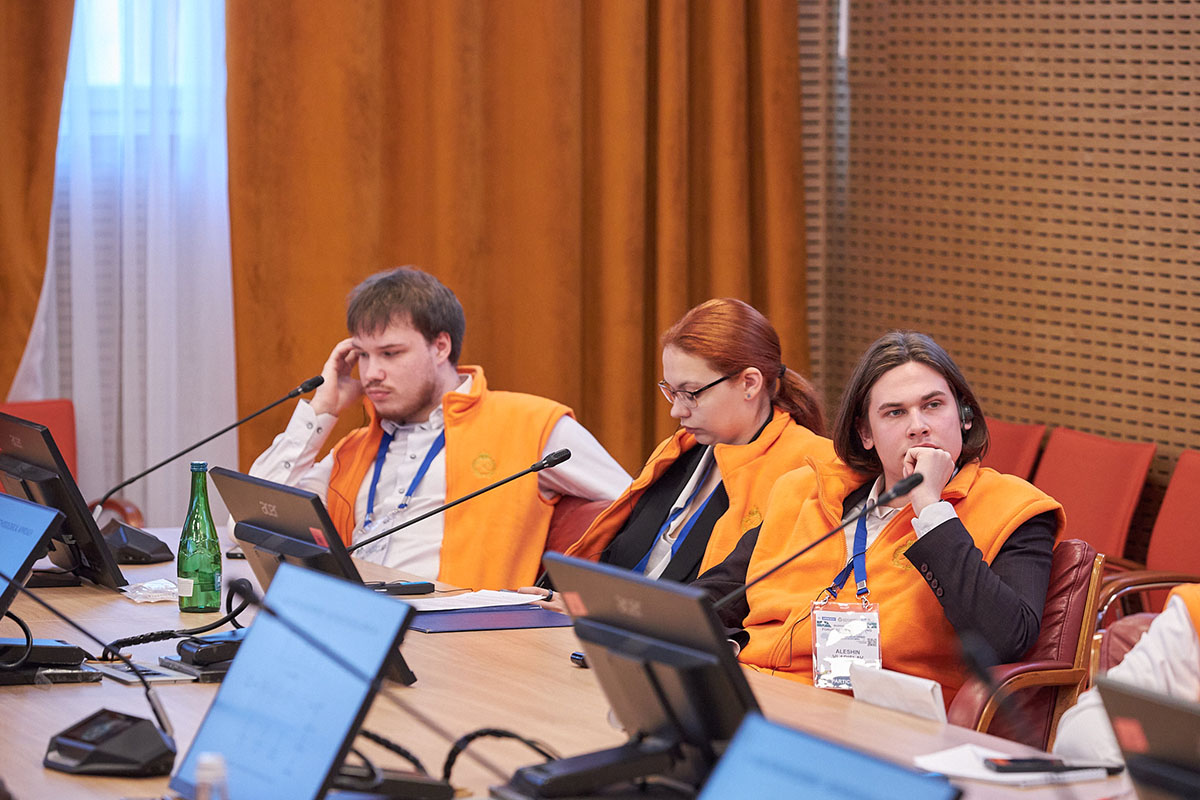
Participation in the forum allowed SPbPU teams to present engineering solutions oriented toward the real tasks of industry and infrastructure in African countries. The victory in the “Mechanical Engineering” section confirmed the high level of the SPbPU team’s development, and the projects in the fields of energy and construction demonstrated the wide range of the university’s engineering competencies.