
Strategic Partnership in Action: Results of December Visits by Polytech Delegations to the Belarusian-Russian University
In December, the Belarusian-Russian University (BRU) hosted four delegations from Peter the Great St. Petersburg Polytechnic University (SPbPU). These visits, conducted as part of the implementation of joint educational and scientific projects, covered key technological areas: cyber-physical systems, welding technologies, intelligent transport, and modern construction technologies. Each meeting featured a packed agenda and yielded concrete results, strengthening the strategic partnership between the two universities.
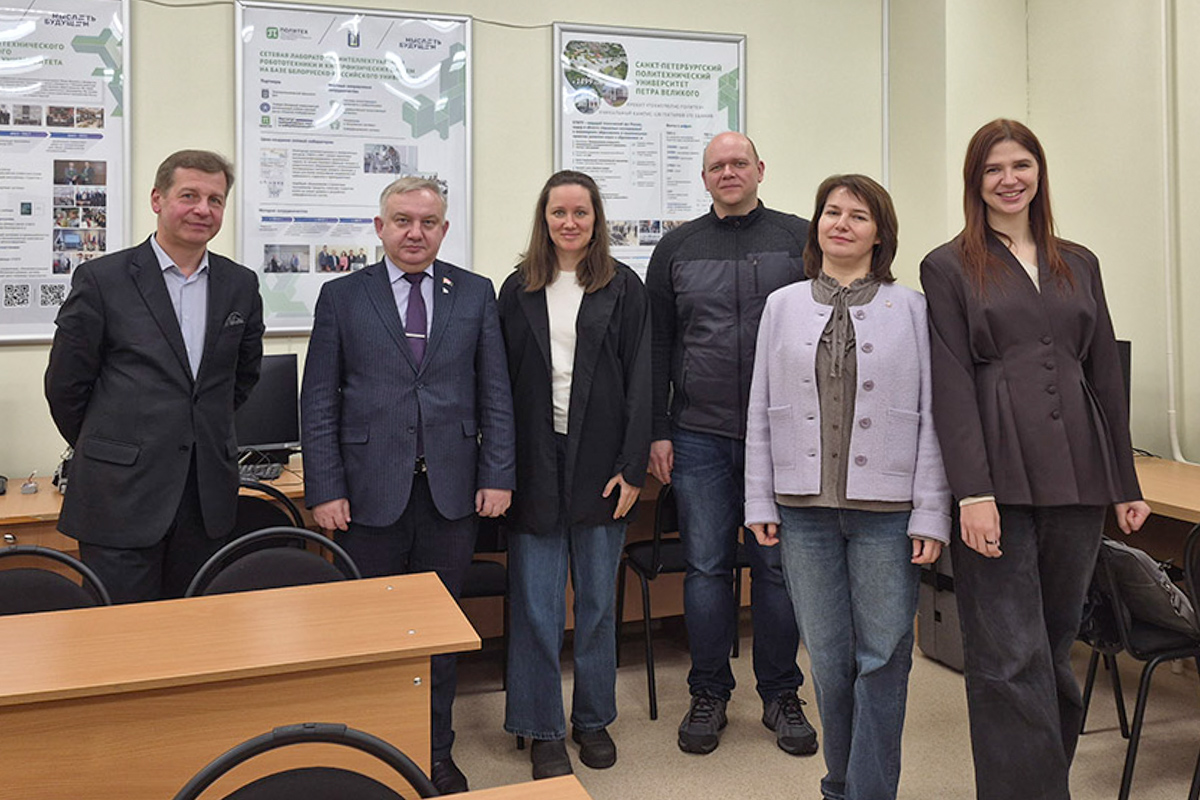
As part of joint projects, the partner university was visited by representatives from SPbPU’s Higher School of Cyber-Physical Systems and Control — Associate Professor Vyacheslav Potekhin and Senior Lecturer Elena Selivanova. An international professional retraining program, «Models and Tools for Enterprise Digital Transformation,» was finalized and prepared for launch for the first group of BRU students, who will begin their studies in March 2026. A joint scientific seminar involving faculty and young scientists from both universities was also held, featuring five presentations.
BRU Also Hosted Representatives from Two Leading Schools of SPbPU’s Institute of Machinery, Materials, and Transport (IMM&T): the Higher School of Physics and Materials Technology and the Higher School of Transport.
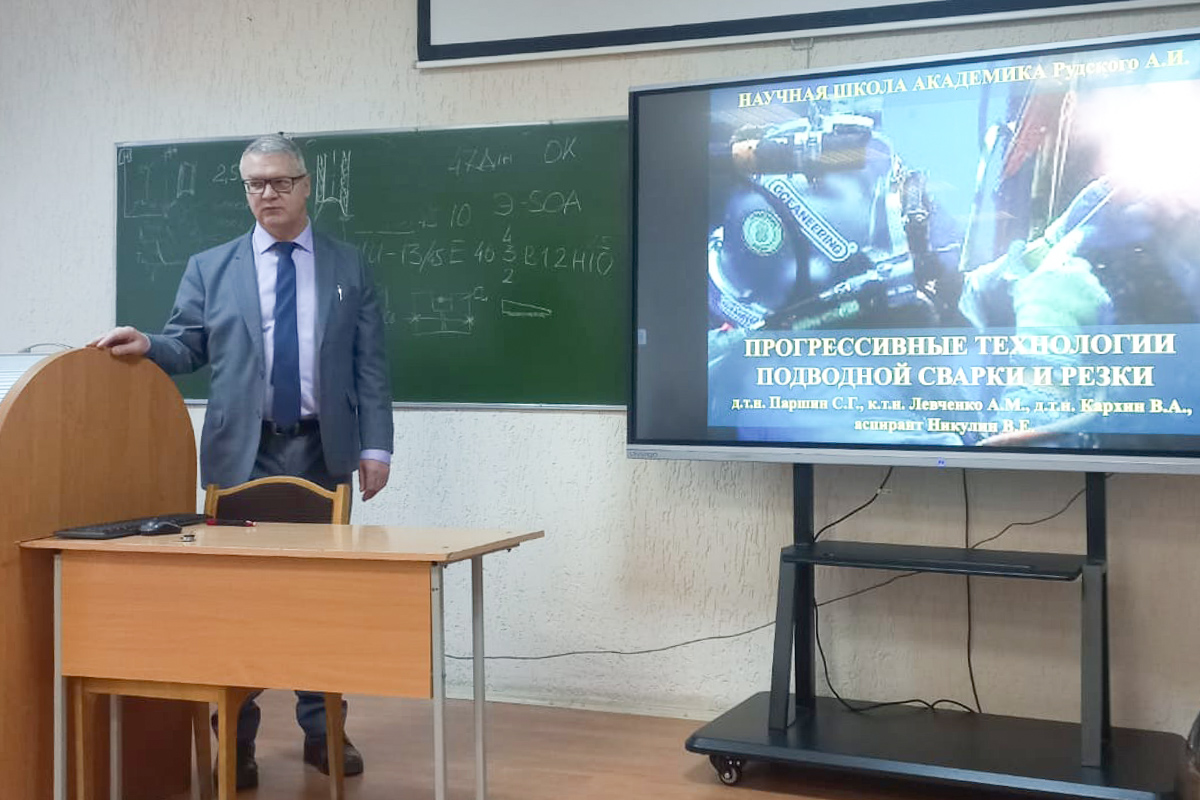
The visit program included a series of lectures on intelligent transport systems, which examined modern traffic flow management methods using St. Petersburg as an example. During working meetings with BRU colleagues, particularly with the Head of the «Transport and Technological Machines» department, Igor Leskovets, issues of improving educational programs, creating joint online courses, and integrating artificial intelligence into the educational process were discussed. A key practical outcome was the development of an exchange roadmap: internships at SPbPU in digital technologies and AI are planned for BRU faculty, and short-term continuing professional education modules for students.
Another significant event was the research internship for staff from SPbPU’s Higher School of «Hydrotechnical and Energy Cooperation» (ICE) — Associate Professor Mikhail Romanov and Senior Lecturer Vyacheslav Zhazhkov. The primary focus was on studying advanced methods of non-destructive testing of buildings and structures, including ultrasonic, radiographic, and thermal imaging diagnostics. Upon completion of the training, participants received corresponding certificates from the hands of BRU’s Vice-Rector for Academic Affairs, Natalia Vologina.
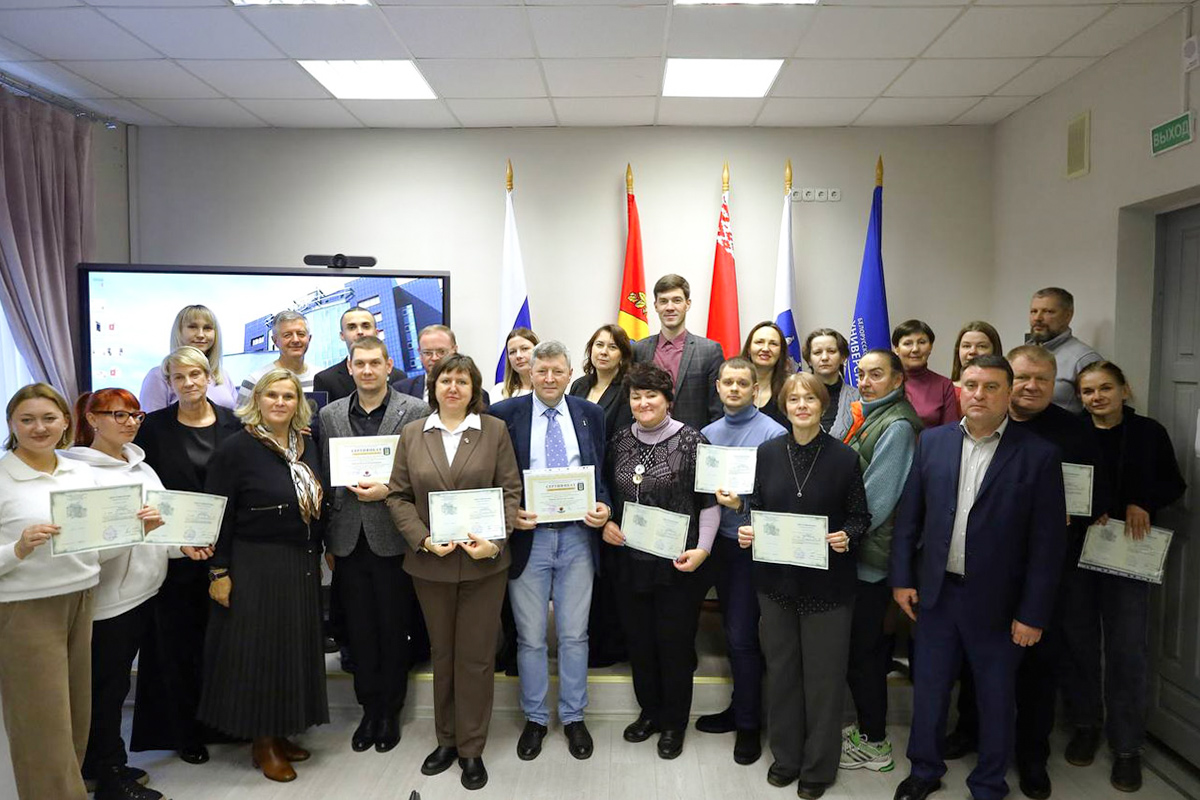
During the visit, a ceremonial presentation was held where 39 staff members of BRU’s Construction Faculty received certificates of advanced training in decarbonization of emissions and BIM modeling programs, implemented with the support of SPbPU.
At the final working meeting between the leadership of SPbPU’s ICE and BRU’s Construction Faculty, promising areas of cooperation for 2026 were outlined. The most significant among them were: developing documentation for opening a joint bachelor’s degree program in «Technosphere Safety» in 2027 and creating a joint educational laboratory for BIM technologies.
The series of December visits by SPbPU delegations to the Belarusian-Russian University clearly demonstrated the high dynamism and practical focus of the strategic partnership. Moving from general agreements to implementation, the universities are successfully launching new educational programs, organizing internships, holding joint scientific events, and planning the creation of shared educational infrastructure. Such multifaceted interaction creates a solid foundation for forming a unified scientific and educational space and training highly qualified personnel capable of solving pressing technological challenges for the economies of Russia and Belarus.