
Technologies of Intelligent Railway Infrastructure: A Polytechnic University and Lanzhou Jiaotong University Project
Lecturers from the Graduate School of Cyber-Physical Systems Management at SPbPU visited Lanzhou Jiaotong University (LZJTU) — one of China’s oldest specialised higher education institutions. The visit continued the cooperation that has been developing since the signing of an agreement between SPbPU and LZJTU in January 2021. During this time, the universities have moved from academic exchanges and individual scientific contacts to joint research in the field of intelligent transport systems and the participation of Polytechnic staff in a major research and educational project in Gansu Province.
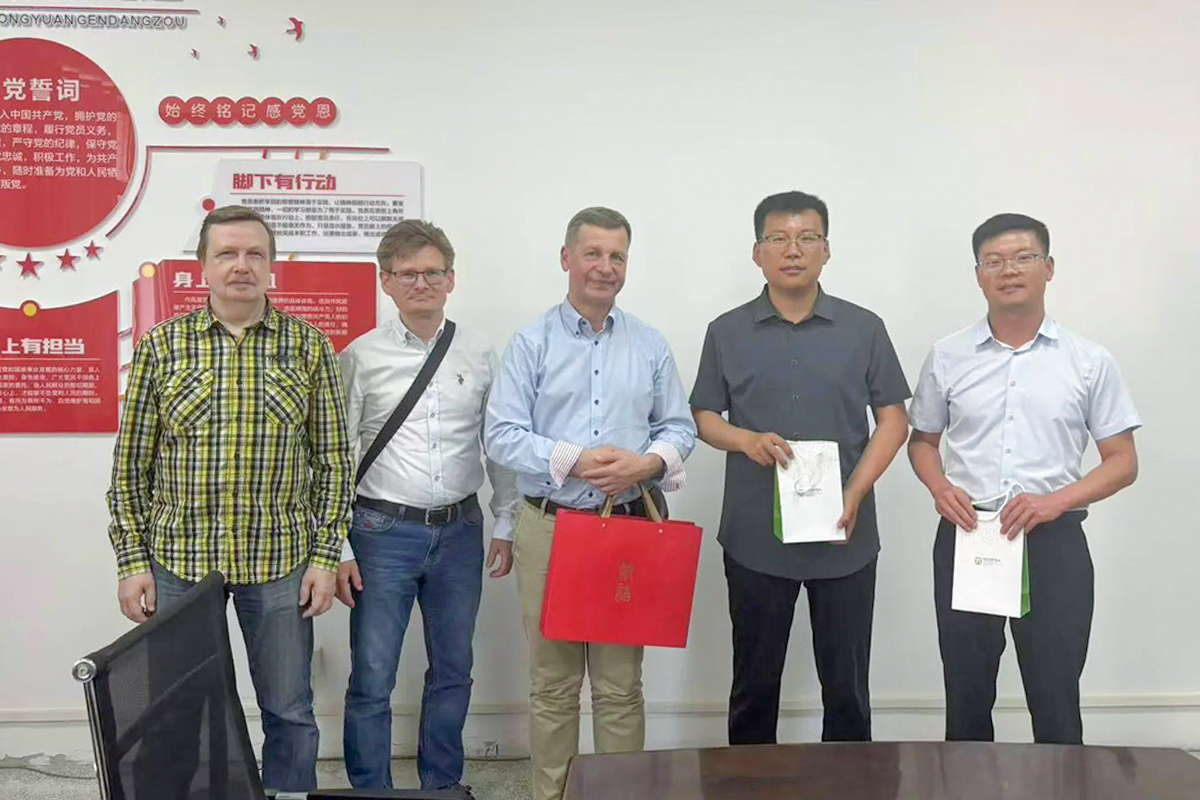
The Chinese partners invited SPbPU staff as experts to participate in a project dedicated to the intelligent management of railway infrastructure condition. The invitation was a recognition of SPbPU’s expertise in the fields of cyber-physical systems, intelligent control, data analysis, and modelling of complex technical facilities.
The project focuses on the deep integration of artificial intelligence and engineering technologies for railway industry applications. Researchers from SPbPU and LZJTU are conducting fundamental theoretical and technical research related to the construction of an intelligent network for managing railway infrastructure condition, monitoring and predicting its state under complex conditions, as well as modelling and assessing environmental impact factors. The practical value of this work lies in improving infrastructure reliability, early risk detection, optimising maintenance, and enhancing traffic safety.
As a result of joint research, a number of co-authored articles with Chinese colleagues have been published in international scientific journals. Applied Sciences published the article “MDFT-GAN: A Multi-Domain Feature Transformer GAN for Bearing Fault Diagnosis Under Limited and Imbalanced Data Conditions,” dedicated to bearing fault diagnosis under limited and imbalanced data. Applied Intelligence published the work “The improved mountain gazelle optimizer for spatiotemporal support vector regression: a novel method for railway subgrade settlement prediction integrating multi-source information,” related to railway subgrade settlement prediction. Another publication, “Robust Bearing Fault Diagnosis via Bio-Inspired Spectral Enhancement and Multi-Modal Contrastive Graph Attention,” appeared in IEEE Sensors Journal and addresses robust bearing fault diagnosis in complex industrial environments.
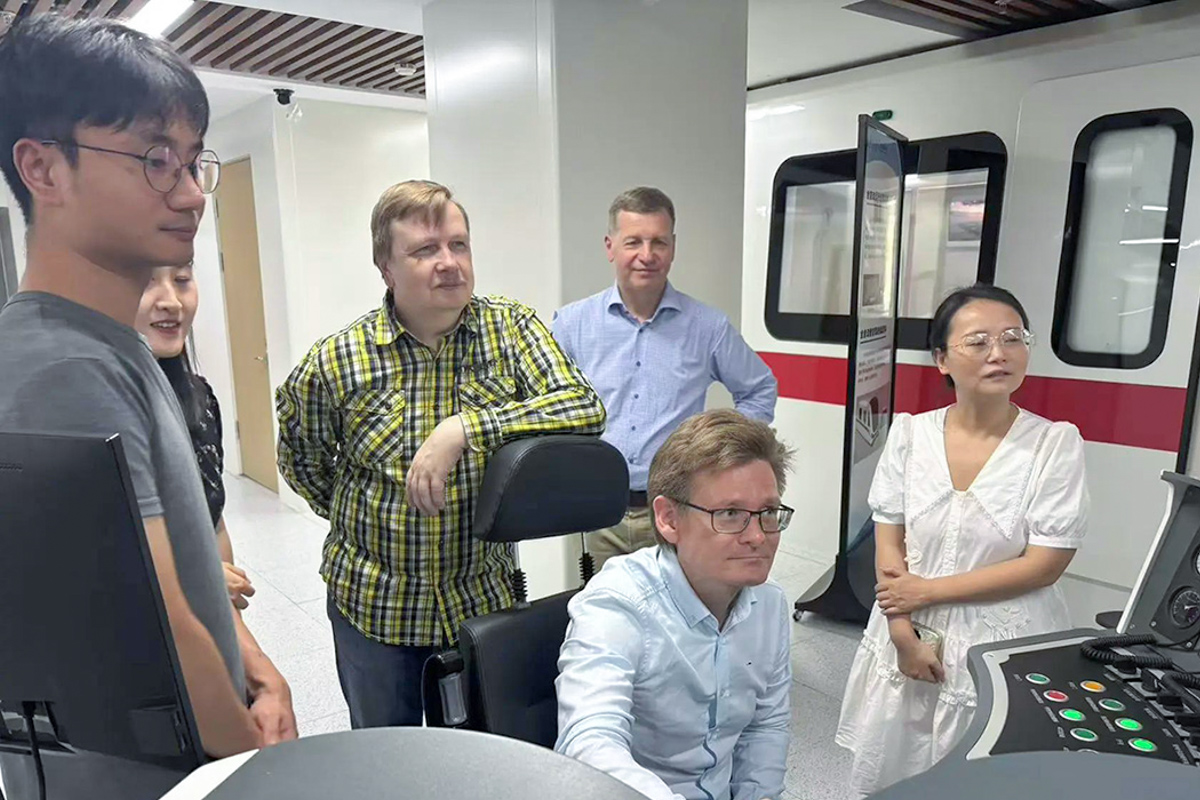
During the visit, SPbPU lecturers delivered open lectures for master’s and doctoral students of LZJTU. The topics covered the comprehensive process of equipment monitoring and predictive maintenance, the introduction of barrier functions into monitoring systems to enhance train traffic safety, and algorithms for barcode design and digital image processing in levelling systems for distance measurement. The lectures continued the scientific dialogue between LZJTU’s School of Automation and Electrical Engineering and SPbPU’s Graduate School of Cyber-Physical Systems Management.
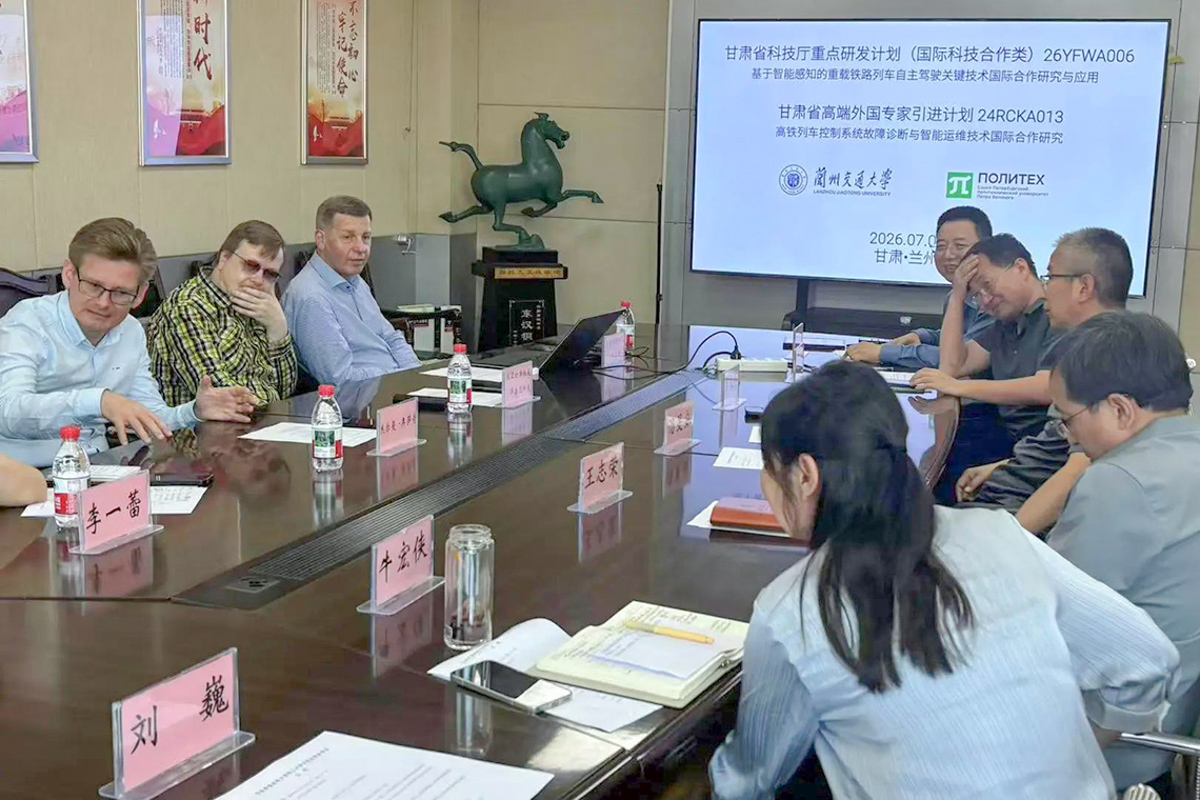
The parties paid special attention to preparing a new joint grant application on the topic “Optimisation of train movement profiles through research on a digital dynamic infrastructure platform.” The project participants are expected to include Chinese doctoral students from SPbPU as well as representatives from LZJTU. This format is particularly important for Polytechnic University: Chinese doctoral students become not only participants in the educational process but also a bridge between the research groups of the two universities.
The visit of SPbPU lecturers to LZJTU demonstrated that the cooperation between the two universities is reaching a new level. Over five years, the partnership has evolved into comprehensive research and educational work: participation in the Gansu Province grant, joint research, publications, lectures for young scientists, preparation of a new grant application, and the involvement of Chinese doctoral students of Polytechnic University in joint scientific activities. For SPbPU, this is yet another example of how international cooperation is built around strong engineering expertise and delivers practical results for high-technology industries.