
Zhejiang University visited SPbPU
Peter the Great St. Petersburg Polytechnic University hosted a representative delegation from Zhejiang University (PRC) — one of China’s leading universities and a long-standing strategic partner of SPbPU. The visit continued the work to strengthen the anchor partnership, a status SPbPU received in November 2025, with the key area of interaction defined as the Laboratory of Hydraulics and Mechatronic Systems of the Chinese university. The delegation was led by Professor Xu Bing, Director of the School of Mechanical Engineering.
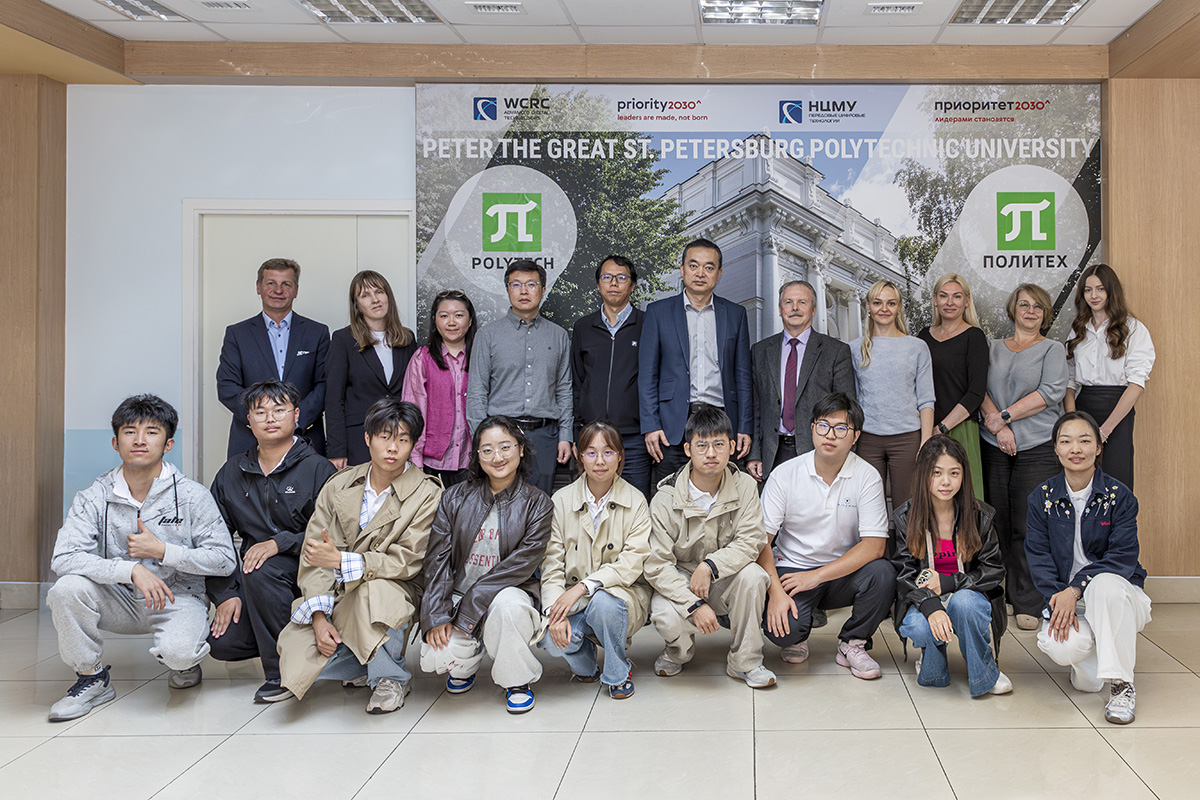
The visit program began with a sightseeing tour of the campus, where the guests could appreciate the scale and architectural heritage of Polytechnic. The delegation was then received by the Graduate School of Automation and Robotics: Director Olga Matsko presented the school’s key competencies and introduced the Chinese colleagues to modern lecture halls. The rich program continued at the Institute of Machinery, Materials and Transport — the guests visited three research laboratories: “Laser and Additive Technologies,” “Lightweight Materials and Structures,” and “Composite Materials.” Of particular interest to the delegation was the youth project activity center “FabLab Polytech,” where students turn their engineering ideas into real prototypes. The introductory part concluded with a visit to the educational and research center “Polytech-Cyberphysics” under the direction of Director Vyacheslav Potekhin.
Opening the official meeting, Vladimir Khizhnyak, Head of the International Relationas Office of SPbPU, warmly welcomed the Chinese colleagues: When we talk about international cooperation, China for us is not just one of our partners, but a true strategic priority. Two joint engineering institutes, a representative office in Shanghai, thousands of students — this is only the visible part of our joint work. Today we showed our Chinese colleagues how Polytechnic is developing: from additive technology laboratories to the Polytechnic-Cyberphysics center. And I can say with confidence — our dialogue is moving to a qualitatively new level. We are ready for joint breakthrough research, for the exchange of talent, and for the implementation of our shared ambitious plans.
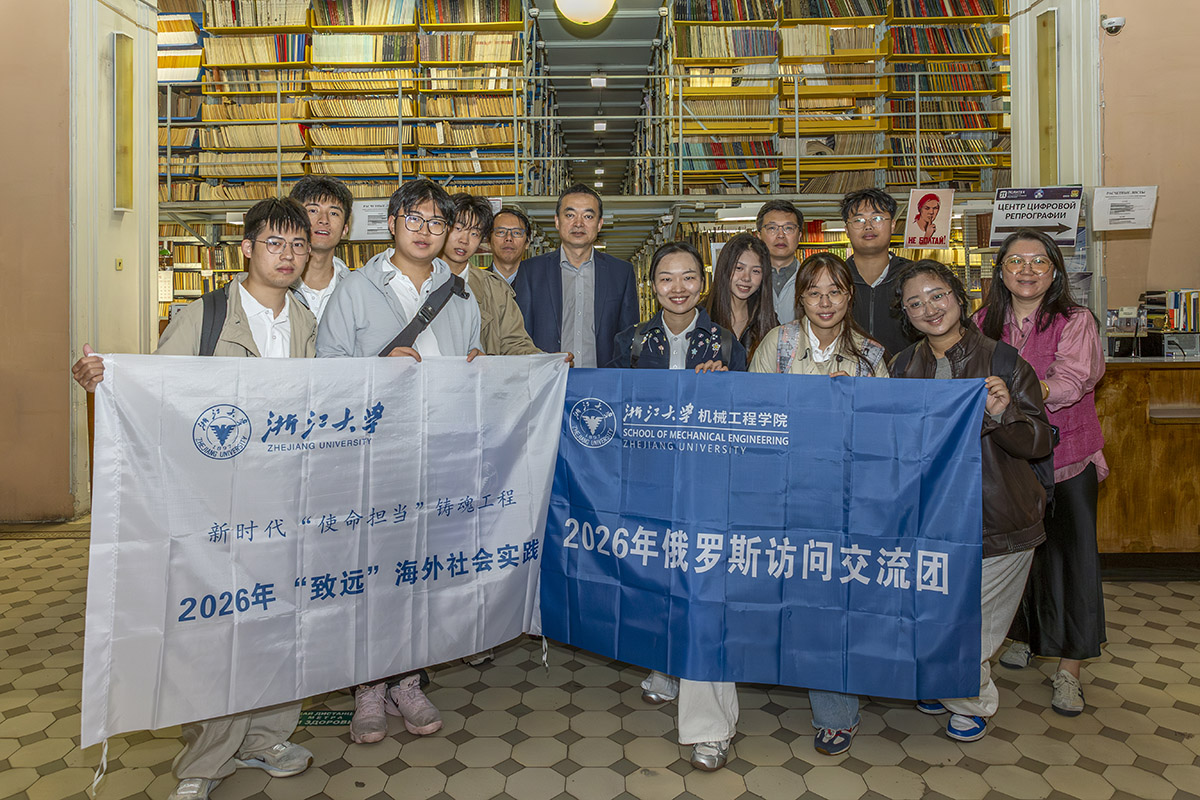
Cooperation with Zhejiang University has lasted more than 20 years (first agreement — 2004, strategic partnership — since 2015). In June 2026, a new strategic partnership agreement was signed for 2026−2031. Over 10 years, scholars from the two universities have published 22 joint articles and more than 130 papers in high-ranking journals; over five years, more than 800 students from Zhejiang University have participated in summer and winter schools at SPbPU. The performance of the Zhejiang University folk orchestra at Polytechnic’s 120th anniversary was recalled with particular warmth — it became a true highlight of the celebration, and the host side expressed hope to see the creative ensembles of their Chinese partners again.
Head of the delegation Professor Xu Bing thanked the hosts for their reception and shared his impressions: This is my second visit to Russia, but the most in-depth acquaintance with the Polytechnic University. Today we saw with our own eyes many laboratories and research centers.
He spoke about the scale of the School of Mechanical Engineering. The research potential of the institute is impressive: building area exceeds 40,000 sq. m, annual competitive grants exceed 500 million yuan (60−70% from the state, 30−40% from industry). The institute’s structure includes 8 research units, and a new institute for industrial artificial intelligence has recently been established.
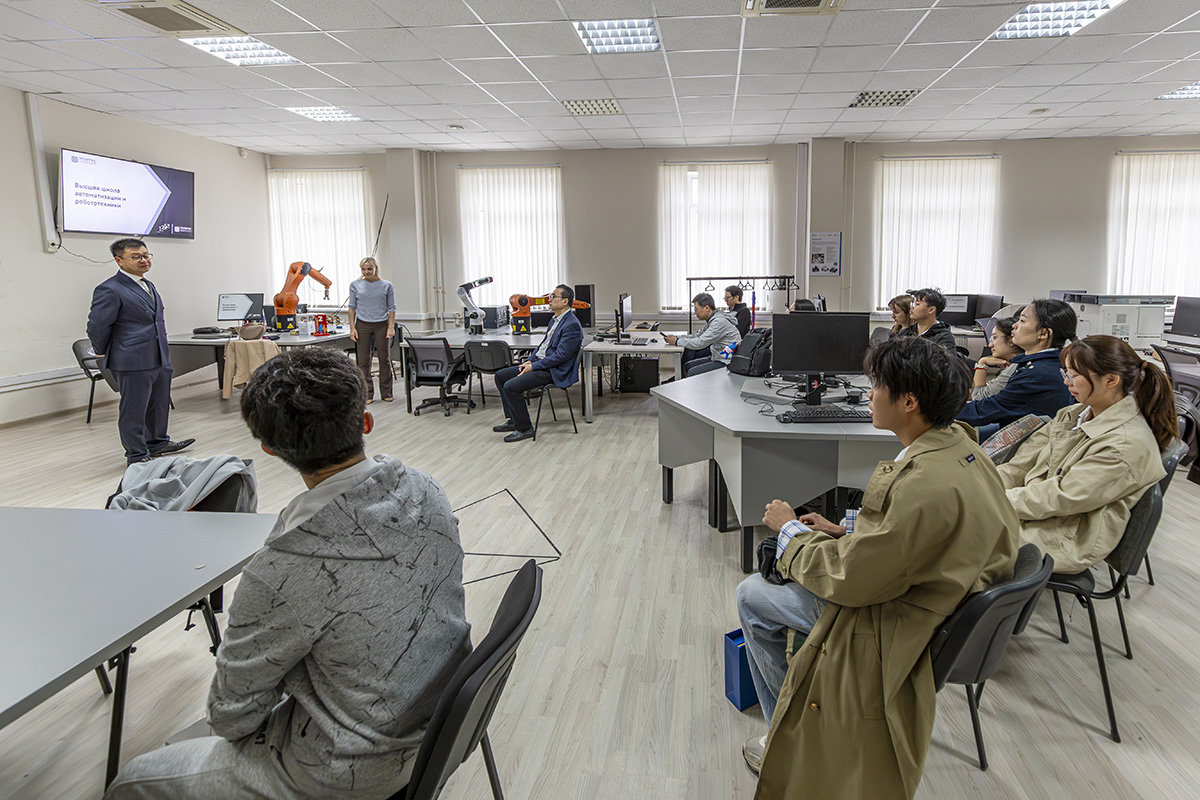
Professor Xu Bing elaborated on priority areas. The flagship direction, with the greatest influence in China and abroad, is hydraulics and mechatronic systems (founded by an outstanding scholar, a graduate of Harbin Polytechnic, and former Vice-Chairman of the NPC Standing Committee). Other priorities include automation and digitalization of mechanical engineering, advanced technologies and materials (especially in aircraft manufacturing), as well as biomanufacturing (which has already gained international recognition) and atomic manufacturing — a new paradigm in which China holds leading positions; just a month ago, institute scholars published an article in the journal Science in this field. Responding to a question about prospects for interaction with the Institute of Mechanical Engineering, Materials and Transport of SPbPU, Professor Xu Bing emphasized: We have many research areas that overlap with your mechanical engineering institute, and I am confident that many opportunities for cooperation await us in the future.
During the negotiations, SPbPU’s short-term educational programs were also presented in detail: more than 48 summer and winter school courses across six areas (engineering, natural sciences, IT, energy, social sciences, economics, Russian studies). The 2026 summer schools already hosted 56 students from Zhejiang University in energy-related programs. SPbPU representatives expressed readiness to develop joint Master’s and PhD programs, joint thesis supervision, and short-term faculty internships.
The parties confirmed the development of the June agreements and specified steps for anchor cooperation in the field of hydraulics and mechatronic systems. In autumn 2026, a return visit of SPbPU staff to Zhejiang University is planned for detailed elaboration of programs for 2026−2031.