
Starting from Vostochny: Russian scientists have received a new instrument for studying the ionosphere
On July 25, at 08:54 Moscow time, a Soyuz-2.1b launch vehicle with a Fregat upper stage was launched from the Vostochny cosmodrome, which delivered two Ionosphere-M heliogeophysical spacecraft No. 3 and No. 4, as well as a group of 18 small space satellites, to their calculated orbits.
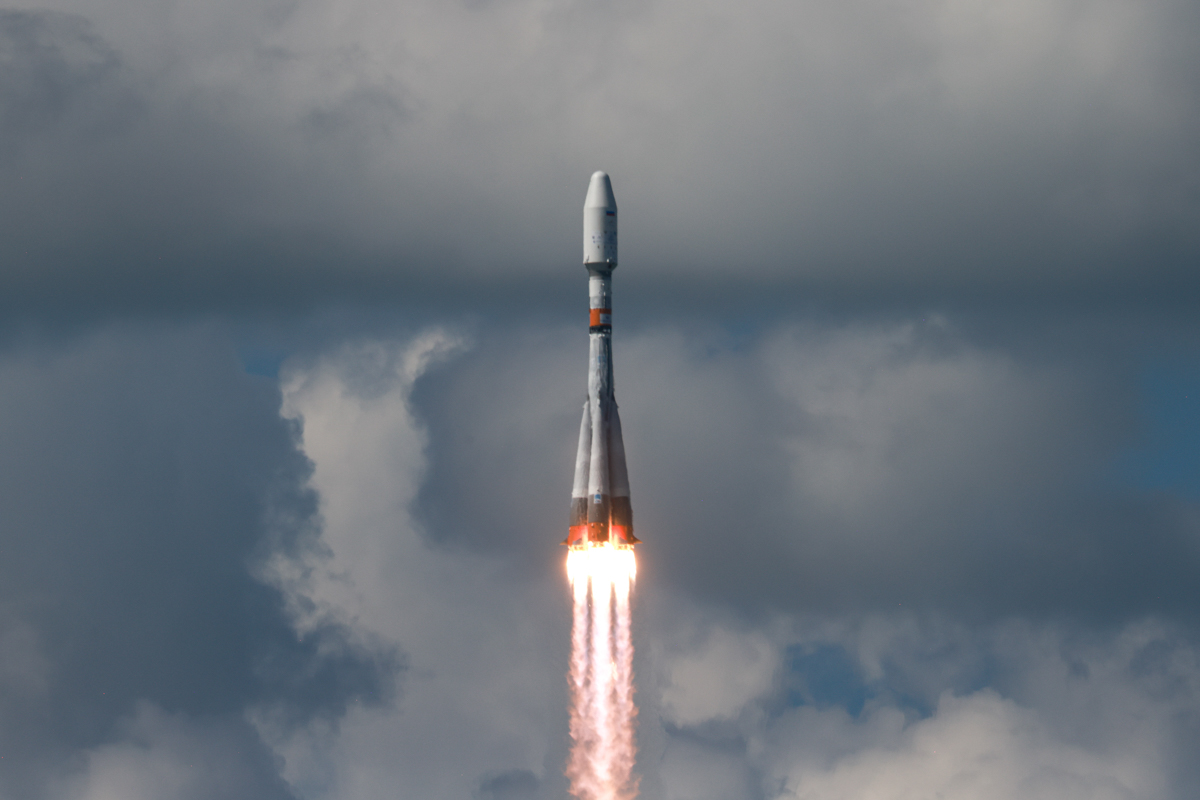
The launch of the Ionosphere-M series of satellites has completed the formation of a grouping of four Ionozond spacecrafts, which will monitor the geophysical situation to conduct basic scientific research and solve applied problems.
The complex was created in the interests of the Russian Academy of Sciences and the Russian Federal Service for Hydrometeorology and Environmental Monitoring. Ionosphere-M satellites are designed for a comprehensive study of the upper layers of the Earth’s atmosphere. They will observe various physical processes in the ionosphere, including natural and man-made impacts, changes in electromagnetic fields, atmospheric composition and ozone distribution. The data obtained will be used by Roshydromet in combination with ground observations. The Russian Academy of Sciences plans to conduct ground-based space experiments to study the ionosphere’s response to natural phenomena such as hurricanes and volcanic eruptions.
18 small satellites have also been launched into orbit. Nine of them were created by Geoscan and will be engaged in photographing the Earth, tracking the movement of ships and aircraft, exploring near space and much more. Some of the devices are intended for educational purposes.
Ivan Bortnik, Advisor to the Director General of the Innovation Promotion Foundation, praised the significance of today’s launch: This is a great achievement of Roscosmos — the completion of the formation of the Ionosphere-M satellite group for research by our scientists, representatives of fundamental science. There are also many private satellite companies participating in this launch. One of the Geoscan devices is part of the project Space Pi, project, which is important for the Foundation for the Promotion of Innovation and for Polytech as the founder and leader of the project. This is the first of a series of satellites that students will be able to use to hunt for supernovae. As the Foundation for the Promotion of Innovation, we held a competition and determined the winners who will start manufacturing such devices, I hope that they will fly next year.
According to Ivan Bortnik, the nanosatellite «239Alferov» of the Presidential Physics and Mathematics Lyceum No. 239 and the Lyceum «Physics and Technology School named after J. I. Alferov» will open a new direction of the Space Pi project — the launch of target vehicles. This is the first of a series of satellites equipped with X-ray sensors that will hunt for supernovae. This will be possible thanks to the network of ground stations created by Geoscan, covering almost the entire territory of Russia.
Photo: roscosmos.ru